


Blog
Hiring a PLC & HMI Programming Consultant: What to Look For

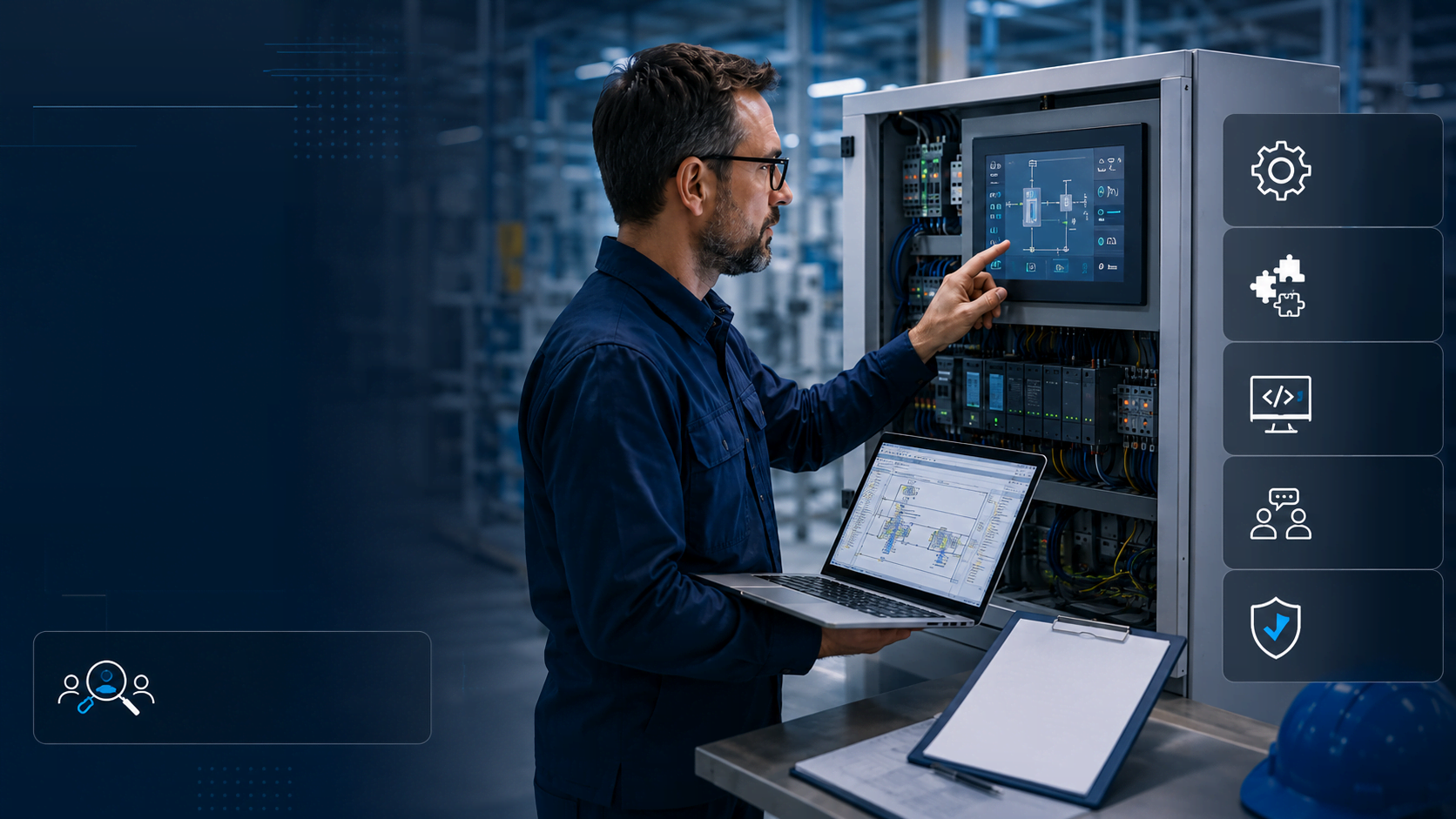
Hiring a PLC & HMI programming consultant is not just a technical decision, it’s an operational one. before thinking when to hire a PLC/HMI consultant, one needs to look for other things.
At first glance, it might seem like you’re simply bringing in someone to write code, fix logic, or improve system behavior. But in reality, the impact goes much deeper. The right consultant can improve system clarity, reduce recurring issues, and help your automation perform more predictably over time. The wrong one can introduce complexity, create dependencies, and leave behind systems that are harder to manage than before.
That’s why knowing what to look for matters.
It’s not about finding the most experienced person on paper. It’s about finding someone who understands how automation systems actually behave in real production environments, and how people interact with them every day, and the range of professional automation services they provide.
Start With Problem Understanding, Not Just Technical Skill
The first thing to look for is not technical expertise—it’s how the PLC & HMI Programming Consultant looks at the problem.
A strong consultant doesn’t jump straight into programming. They start by asking questions. They try to understand how your system currently works, where the friction lies, and what outcomes you’re actually aiming for. Apart from that, also look at the contract automation solutions they provide.
This might sound obvious, but it’s often overlooked.
Some consultants focus heavily on tools, platforms, or specific programming styles. While those skills matter, they don’t guarantee the right outcome. What matters more is whether the consultant can connect technical decisions to operational impact.
If someone begins by understanding your process instead of prescribing a solution immediately, that’s usually a good sign. It shows they’re focused on solving the right problem, not just applying familiar techniques.
Look for Clarity in Their Approach to Programming
Programming quality is not just about functionality, it’s about clarity.
A system can work correctly and still be difficult to understand. Over time, that becomes a problem. Troubleshooting takes longer. Modifications become risky. Teams rely heavily on the person who originally wrote the code.
A good consultant avoids this situation by writing logic that is structured, readable, and consistent.
They think about how the system will be maintained, not just how it will run.
You’ll often notice this in how they explain things. If they can describe system behavior clearly without relying on overly technical language, it usually reflects how they structure their programming as well.
Clarity in communication often translates into clarity in code.
Experience Should Be Relevant, Not Just Extensive
Experience matters, but relevance matters more.
A consultant who has worked extensively with systems similar to yours will understand practical constraints much faster. They’ll recognize common patterns, anticipate challenges, and avoid decisions that might create issues later.
However, this doesn’t mean you need someone who has worked in the exact same setup. What you’re looking for is familiarity with environments where coordination, timing, and interaction between systems play a key role.
This type of experience helps consultants make decisions that align with real production behavior, not just theoretical models.
Evaluate How They Approach System Integration
Automation systems rarely exist in isolation. Most PLC & HMI Programming Consultant will need to work with existing machines, control systems, and workflows.
This is where integration becomes critical.
A strong consultant doesn’t treat your system as something to replace or override. They work within it. They understand how to align new logic with existing processes, ensuring that changes improve performance without disrupting what already works.
Integration requires patience and attention to detail. It also requires respect for the system as it exists today.
If a consultant talks about rebuilding everything from scratch without fully understanding your current setup, that’s usually a red flag.
Pay Attention to How They Think About the HMI
PLC programming often gets more attention, but HMI design plays an equally important role in system performance.
A good consultant understands that the interface is not just a display, it’s a decision-making tool.
They think about:
- What information operators actually need
- How quickly that information can be understood
- How clearly system states are communicated
Instead of adding more screens or more data, they focus on making the interface easier to use.
This attention to usability improves response time and reduces confusion during operation.
Look for a Long-Term Mindset
One of the most important qualities in a consultant is how they think about the system after they leave.
Do they design with future changes in mind? Do they structure logic so it can be expanded or modified easily? Do they document their work in a way that others can understand?
These questions matter more than immediate results.
A consultant who focuses only on solving the current issue may deliver quick improvements, but those improvements can become difficult to build on later. A consultant with a long-term mindset creates systems that remain useful and manageable as your needs evolve.
Communication Style Matters More Than You Think
Technical expertise is important, but communication determines how effectively that expertise is applied.
A consultant should be able to explain what they are doing, why they are doing it, and how it impacts your system. This doesn’t mean simplifying everything, it means making complex ideas understandable.
Good communication creates alignment. It ensures that your team understands changes and feels confident interacting with the system.
It also reduces misunderstandings during the project, which helps avoid delays and rework.
Watch How They Handle Complexity
Automation systems can become complex quickly, especially when multiple processes, machines, and conditions are involved.
The way a consultant handles complexity tells you a lot about their approach.
Some try to solve complexity by adding more logic, more conditions, or more layers. This can make the system harder to understand over time.
Others simplify where possible. They organize logic in a way that reflects how the system actually operates. They reduce unnecessary steps and focus on clarity.
The second approach usually leads to better long-term performance.
Documentation Is Not Optional
Documentation is often treated as a secondary task, but it plays a major role in system sustainability.
A good consultant treats documentation as part of the work, not something to be done later if time allows.
This includes:
- Clear explanation of system structure
- Description of key logic flows
- Guidance for troubleshooting and updates
Documentation ensures that your team can work with the system confidently, even after the consultant is no longer involved.
Flexibility in Working With Your Team
Every facility operates differently. Some teams prefer structured processes, while others rely more on experience and adaptability.
A strong consultant adjusts to your environment.
They don’t impose rigid methods that disrupt how your team works. Instead, they align their approach with your existing workflows while introducing improvements where needed.
This flexibility makes collaboration smoother and helps the project progress without unnecessary friction.
Red Flags to Be Aware Of
While evaluating consultants, there are a few warning signs that are worth noting which sets PLC/HMI programming standards
If someone:
- Focuses only on tools rather than outcomes
- Avoids explaining their approach clearly
- Suggests major changes without understanding your system
…it’s worth taking a step back.
These behaviors often lead to solutions that look good technically but don’t fit well operationally.
Making the Right Choice
Hiring a PLC & HMI programming consultant is not about finding the most impressive profile. It’s about finding someone who understands how systems behave, how people interact with them, and how to improve both.
The right consultant will:
- Ask the right questions
- Design with clarity
- Align with your operational needs
- Leave the system in a better, more manageable state
That combination is what creates lasting value.