


Blog
Benefits of Custom Automation in Production Environments

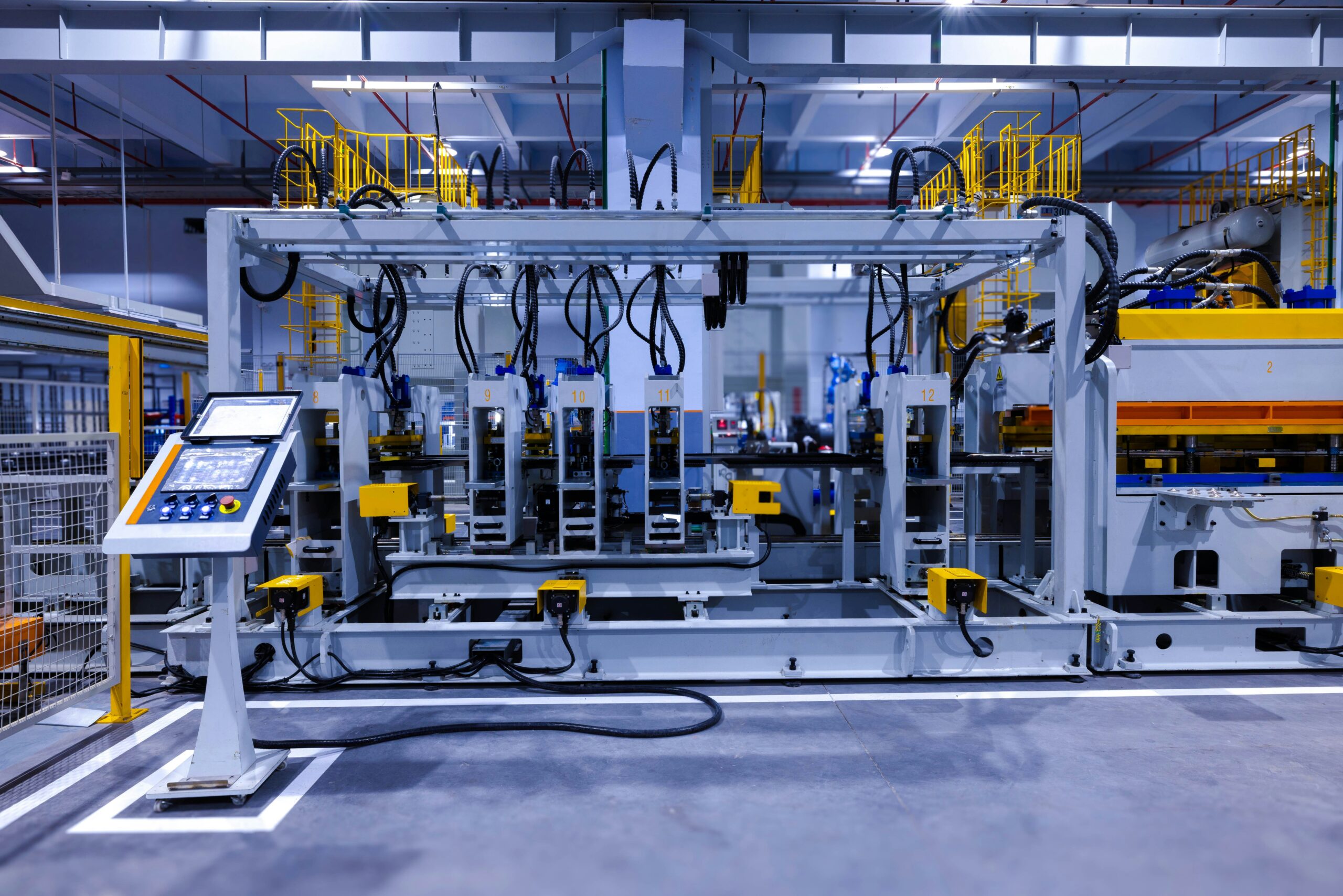
Custom industrial automation improves production environments by increasing throughput, reducing errors, cutting long-term operational costs, and giving manufacturers real-time visibility into their processes. Unlike off-the-shelf systems, custom automation is engineered around your specific workflow, so it fits the way your plant actually runs instead of forcing your plant to run a different way. The result is a production line that’s faster, safer, more consistent, and easier to scale as demand changes.
That’s the short answer. Now let’s dig into why custom automation has become one of the most powerful levers manufacturers can pull, and how you can put it to work on your own floor.
Why Production Environments Are Turning to Custom Automation
Production environments today are under constant pressure. Customers want faster deliveries. Quality standards keep getting tighter. Costs refuse to sit still. And skilled labor isn’t always easy to find. In the middle of all this, manufacturers are realizing that generic automation tools can only take them so far. A machine built for “the average factory” ends up compromising somewhere on space, on cycle time, on your specific product mix, or on the legacy equipment you still rely on every day.
That’s exactly where custom automation earns its place. Instead of buying a system and reshaping your operation around it, you get automation that’s designed around your reality from the start. It adapts to your workflow instead of forcing your workflow to adapt to it, and that shift alone unlocks a wide range of practical, measurable benefits.
Let’s break down what those benefits actually look like on the floor.
Custom Automation Fits the Process, Not the Other Way Around
One of the biggest advantages of custom automation is that it starts with your reality, not a template. Every production line has its own constraints: space limitations, product variations, cycle time targets, compliance requirements, and legacy equipment that still needs to work alongside new systems.
Custom automation is built around these exact conditions. Engineers study your existing process, identify bottlenecks, and design automation that blends into what already works while fixing what doesn’t. Instead of redesigning your entire line to suit a machine, you get automation that respects your layout, your sequencing, and your operational priorities.
This process-first approach is also what separates true industrial automation from generic “plug and play” equipment. When a system is engineered specifically for your process, it integrates faster, causes fewer disruptions during deployment, and gets adopted by your operators much sooner. You’re not fighting the equipment you’re working with it.
Higher Productivity Without Burning Out Your Workforce
Productivity gains are usually the first thing people associate with automation, but custom automation takes this further by targeting the right tasks rather than just any task.
In many production environments, manual labor still handles repetitive, high-fatigue, or low-value activities. Custom automation zeroes in on these exact pain points. Thus freeing your people to focus on supervision, quality checks, problem-solving, and higher-skill work that actually needs a human brain.
The result isn’t just faster output it’s smarter output. You get improved throughput because machines handle consistent, repetitive work without slowing down over an eight-hour shift. At the same time, your operators experience less physical strain and make fewer errors caused by fatigue. Over time, this balance creates a healthier, more sustainable production environment where people and machines complement each other.
Improved Product Quality and Process Consistency
Consistency is one of the hardest things to maintain in manual production, especially at scale. Even your most skilled operators will naturally introduce small variations over a shift, a week, or a year. Custom automation minimizes this risk by executing tasks with precision and repeatability that a human hand simply can’t match hour after hour.
Whether it’s dispensing exact material quantities, holding uniform torque levels, or following strict timing sequences, automated systems don’t drift from spec. Once they’re programmed and validated, they perform the same way every single cycle.
That consistency shows up directly in your quality metrics. Defects decrease, rework drops, and customer complaints become less frequent. More importantly, quality becomes predictable rather than reactive which matters enormously for manufacturers working under tight tolerances or strict regulatory standards.
Greater Flexibility for Product Variations and Future Growth
A common misconception is that automation reduces flexibility. In reality, well-designed custom automation increases it.
Because the system is built specifically for your production environment, engineers can design it with modularity and scalability built in from day one. That means you can adjust parameters, add stations, or reprogram sequences as your product requirements evolve without starting from scratch.
For manufacturers juggling multiple SKUs or frequent design updates, this flexibility is invaluable. Instead of investing in entirely new machinery every time your product changes, you modify the automated systems you already have to match new demands.
Some of the flexibility advantages you gain include:
- Faster changeovers between product variants
- Easier integration of new tooling or fixtures
- Software-level adjustments instead of full mechanical overhauls
This future-ready design protects your investment and lets your production environment grow without constant reinvention every time the market shifts.
Better Use of Data and Real-Time Visibility
Modern custom automation systems don’t just perform tasks they generate data. And in today’s production environments, that data is as valuable as the output itself.
Custom automation can be designed to capture real-time information on cycle times, downtime, error rates, material usage, and operator interactions. That data gives your managers clear visibility into what’s actually happening on the floor, not just what’s supposed to be happening according to the schedule.
With this level of insight, decision-making becomes proactive instead of reactive. You can catch inefficiencies early, spot recurring issues before they snowball, and fine-tune processes before they escalate into bigger problems. Over time, this builds a culture of continuous improvement backed by real operational evidence, not guesswork.
Reduced Operational Costs Over the Long Term
Custom automation requires upfront investment, and it’s fair to weigh that cost carefully. But its long-term savings are consistently underestimated.
Manual errors, rework, scrap, and unplanned downtime quietly drain resources every single day, even when nothing looks obviously “broken.” Custom automation addresses these inefficiencies at the root by stabilizing processes and reducing variability across the board.
Operational savings typically show up as:
- Lower defect and scrap rates
- Reduced dependence on overtime labor
- Fewer production stoppages caused by human error
- More predictable maintenance planning
When you look at the full lifecycle of the system, custom automation often delivers a strong return on investment. It does that by steadily lowering the cost per unit produced, quarter after quarter.
Enhanced Workplace Safety and Compliance
Production environments can expose workers to repetitive strain, heavy lifting, sharp tools, or hazardous materials. Custom automation lets manufacturers remove people from these high-risk tasks without compromising output.
By automating dangerous or ergonomically demanding operations, companies significantly cut the likelihood of workplace injuries. That protects your employees, but it also lowers insurance costs, minimizes lost workdays, and strengthens compliance with safety regulations you’re already accountable to.
Safer environments tend to improve morale too. Workers feel valued when their well-being is prioritized, and that leads to better engagement and lower turnover over time which is its own kind of operational win.
Faster Response to Market and Customer Demands
Markets move quickly, and production environments have to keep pace. Custom automation gives manufacturers the ability to respond faster to shifts in demand, whether that means ramping up output, adjusting specifications, or tightening lead times.
Because your processes are optimized and standardized, scaling production becomes far more predictable. Instead of scrambling to hire and train additional labor under pressure, automation gives you a controlled, repeatable path to increased capacity.
That responsiveness strengthens customer trust. When you can deliver consistently, on time, and at scale, your production operation becomes a competitive advantage instead of a bottleneck holding your sales team back.
Stronger Alignment Between Engineering and Operations
One benefit that often gets overlooked is how much custom automation improves collaboration across teams. Because these systems are designed through close coordination between engineers, operators, and management, they tend to align far better with real-world operational needs than a generic solution ever could.
Operators feel heard because their input actually shapes the system design. Engineers build solutions grounded in real production challenges instead of theoretical ones. Management gains clearer visibility into performance metrics that matter.
That alignment reduces friction, speeds up troubleshooting, and makes sure your automation investment keeps delivering value long after the installation team has packed up and gone home.
Why Custom Automation Is a Strategic Decision, Not Just a Technical One
At its core, custom automation isn’t just about machines or software. It’s about designing production environments that are resilient, efficient, and ready for whatever comes next.
By tailoring automation to your exact needs, you gain control over quality, productivity, safety, and scalability all at the same time. Instead of reacting to problems as they arise, you build systems that prevent them in the first place. That’s the real promise of industrial automation for manufacturers: it doesn’t just speed up what you’re already doing, it changes how resilient your whole operation is.
For manufacturers looking to future-proof their operations, custom automation isn’t an optional upgrade. It’s a strategic foundation for sustainable growth in an increasingly demanding production landscape.
Choosing the Right Custom Automation Partner
None of these benefits happen automatically just because you install new equipment. They happen because the system was designed correctly in the first place, by people who took the time to understand your process before they ever wrote a line of code or bent a piece of steel.
That’s why choosing the right custom automation partner matters as much as the automation itself. The best partners don’t sell you a catalog product and call it a day. They walk your floor, talk to your operators, study your bottlenecks, and build a solution around the plant you actually have not the plant a brochure assumes you have. Look for a partner who asks hard questions early, who’s transparent about timelines and costs, and who thinks about your next five years of growth, not just this quarter’s project.
How Fenbotics Helps Manufacturers Get There
This is where Fenbotics comes in. Fenbotics, based out of Lancaster, South Carolina, works directly with manufacturers who want industrial automation built around their actual process, not a one-size-fits-all machine forced into their floor plan. The Fenbotics team starts by understanding your bottlenecks, your product mix, and your growth plans, then engineers automation that integrates cleanly with the equipment you already have.
Whether you’re looking to boost throughput, tighten quality control, capture real-time production data, or simply get dangerous, repetitive tasks off your team’s plate, Fenbotics brings the engineering depth and hands-on approach needed to make it happen. For manufacturers evaluating their next automation investment, Fenbotics offers the kind of custom automation partner that treats your production environment as unique because it is.