


Blog
What Is Automotive Manufacturing Automation? (Definition, Benefits & How It Works)

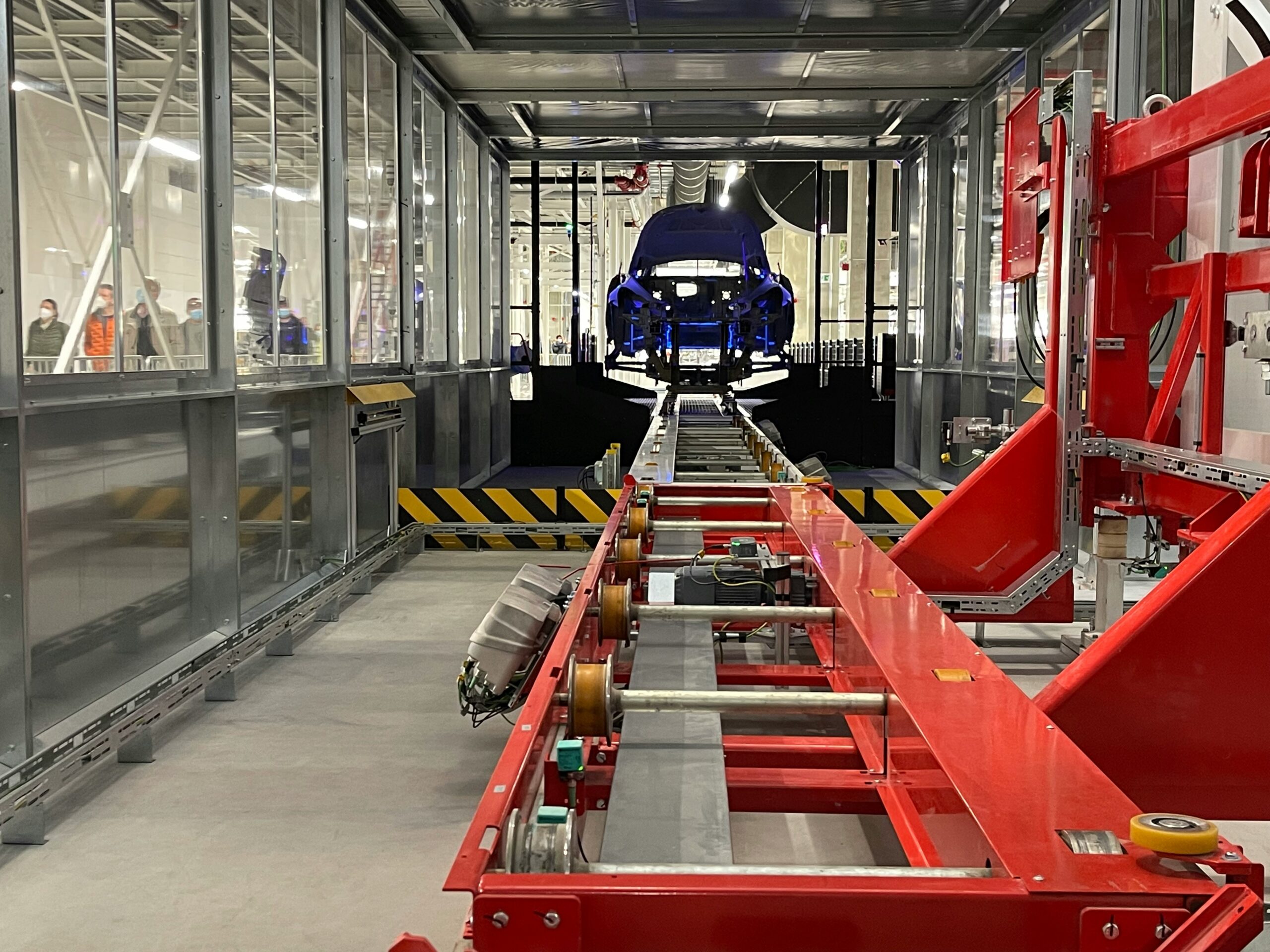
Walk onto almost any modern vehicle production floor and you’ll see the same thing: robots welding body panels, vision cameras scanning for defects, and conveyors moving parts at a pace no human crew could sustain shift after shift. That’s automotive manufacturing automation in action, and it’s the reason a car rolls off the line every 60 to 90 seconds at most major plants instead of every few hours.
If you’re evaluating automation for your own production line, you probably have some version of these questions: What actually counts as automotive manufacturing automation? What does it look like in practice? And is it worth the investment for a plant your size? This guide answers all three, in plain language, with no fluff.
What Is Automotive Manufacturing Automation?
Automotive manufacturing automation is the use of robotics, programmable controls, sensors, and software to perform vehicle production tasks with little or no human intervention. That covers everything from a single robotic welding arm on a body-in-white line to a fully integrated system that handles assembly, inspection, testing, and data collection across an entire plant.
It’s a broad umbrella. Automation can mean:
- A robot that places and welds a single bracket, over and over, thousands of times a shift
- A vision system that inspects every weld for defects before the part moves downstream
- A programmable fixture that reconfigures itself in seconds to handle a different vehicle model
- A plant-wide network of PLCs, HMIs, and data systems that track every part from raw material to finished vehicle
The common thread: automation replaces repetitive, precision-dependent, or physically demanding manual tasks with machines that do the same job faster, more consistently, and with a built-in record of what happened.
This is different from general industrial automation, which spans everything from food packaging to electronics assembly. Automotive manufacturing automation is purpose-built for the specific pressures of vehicle production: extremely high volumes, tight cycle times, multiple models running down the same line, and zero tolerance for the kind of defect that turns into a safety recall.
Why Automotive Manufacturing Automation Exists in the First Place
Car manufacturing has always pushed automation further than most other industries, and it’s not by accident. A handful of forces make automation less of a nice-to-have and more of a requirement.
Volume. A single line can be expected to produce hundreds of vehicles a day. At that pace, even a small manual bottleneck compounds into a major production shortfall by the end of a shift.
Precision. Torque specs, weld strength, and dimensional tolerances on structural components aren’t suggestions. A human welder can be excellent and still introduce variability from one part to the next. A robotic welding cell doesn’t get tired, distracted, or inconsistent on the last part of a 10-hour shift the way a person does.
Safety. Some tasks on an automotive line handling hot stampings, lifting heavy body panels, working inside tight tooling with fast-moving equipment carry real injury risk. Automating those tasks takes people out of harm’s way without slowing the line down.
Model mix. Most plants today don’t build one vehicle. They build a sedan, a crossover, and an EV variant on the same line, often within the same hour. Automated systems with programmable tooling and controls logic can switch between models on the fly. Manual changeovers can’t keep up.
Traceability requirements. Regulators and OEM quality programs increasingly expect part-level data: which torque was applied, which camera confirmed the weld, which fixture built the part. Automated systems capture that data as a byproduct of doing the job, not as a separate task bolted on afterward.
How Automotive Manufacturing Automation Works
It helps to think of automotive manufacturing automation as a stack of layers, each one handling a different part of the job. Here’s how they fit together on a real production line.
1. Robotics: The Muscle
Industrial robots are the most visible layer. Six-axis robotic arms handle welding, material handling, fastening, and dispensing (adhesives, sealants) across body assembly, powertrain, and final assembly stations. A well-integrated robotic cell is programmed for the exact motion path, speed, and force a given operation requires, and it repeats that motion with a level of consistency manual labor can’t match over a full shift.
Robots don’t work in isolation, though. They’re only as good as the tooling, sensors, and controls wired into them which is where the next layers come in.
2. Controls: The Brain
PLCs (programmable logic controllers) and HMIs (human-machine interfaces) coordinate everything happening at a station or across a line. The PLC tells the robot when to move, tells the conveyor when to advance, and tells the safety system to stop everything if a guard door opens. The HMI is the screen an operator actually looks at it needs to be simple enough that a technician can diagnose a fault in seconds, not minutes.
Different plants standardize on different platforms (Allen-Bradley, Siemens, Beckhoff are common choices), and a good automation partner works across all of them rather than forcing a plant to adopt new infrastructure just to add one automated cell.
3. Vision and Sensing: The Eyes
Camera-based vision systems inspect parts at full line speed checking weld integrity, confirming part orientation, verifying dimensional accuracy, and catching defects before a bad part moves to the next station. This is one of the biggest shifts in automotive automation over the last decade: inspection used to mean a person checking a sample of parts after the fact. Now it means every single part gets checked, in real time, without slowing the line down.
4. Fixturing: The Hands That Hold the Part
Fixtures position and hold a part in exact place while a robot works on it. In a mixed-model plant, fixtures need to reconfigure between vehicle variants quickly this is often called rapid-changeover or programmable fixturing. The faster a fixture can switch, the more production hours stay available across a multi-model schedule.
5. Data and Traceability: The Memory
Every automated station generates data cycle times, torque values, weld parameters, pass/fail results. Collecting and structuring that data (often tied into an OEE or IoT platform) gives plant managers real visibility into where a line is losing time and gives quality teams a defensible record for every part that ships.
None of these layers work well in isolation. The value of automotive manufacturing automation comes from how tightly they’re integrated a robot that welds perfectly. But isn’t wired into the vision system for verification, or a PLC that controls the line but doesn’t feed data anywhere useful, leaves real performance on the table.
Where Automotive Manufacturing Automation Shows Up on the Line
Automation touches nearly every stage of vehicle production today. A few of the most common applications:
- Powertrain assembly — automated systems for engine, transmission, and drivetrain components, using force control and torque verification to confirm every fastener meets spec.
- Body and structural assembly — robotic welding, fastening, and joining for body-in-white components, built to flex across multiple models on one line
- Vision inspection and quality — camera systems that verify components and detect defects in real time, integrated directly into the line rather than run as a separate offline check.
- EV and battery systems — automated assembly and test processes for battery modules, e-drive systems, and high-voltage sub-assemblies, where precision and safety margins are especially tight.
- Material handling — automated part transfer and staging that keeps upstream and downstream stations fed without manual carrying or forklift traffic through the work zone.
The Real Benefits of Automotive Manufacturing Automation
It’s easy to list “faster and more accurate” as the benefit of automation and leave it there. In practice, the gains show up in more specific, measurable ways.
Consistent cycle time. Automated stations hit the same cycle time on part one and part ten thousand. That predictability is what lets a plant commit to a production schedule with confidence.
Higher first-pass quality. Catching a defect at the station where it happens rather than at final inspection, or worse, after the vehicle ships costs far less to fix and keeps bad parts from moving downstream.
Lower long-run cost per unit. Automation carries a real upfront investment, but the cost per unit typically drops as volume scales, since the system doesn’t need overtime pay, doesn’t slow down on a Friday afternoon, and doesn’t require retraining every time there’s staff turnover.
Flexibility across model variants. Automated systems with programmable tooling handle multiple vehicle variants on the same line without the output hit that comes from manual reconfiguration.
Safer working conditions. Moving repetitive strain, heavy lifting, and high-heat tasks to machines reduces injury risk and lets your workforce focus on the judgment calls machines can’t make troubleshooting, process improvement, and exception handling.
Full traceability. Part-level data capture means you can answer “what happened to this exact part” months or years later, which matters enormously for warranty claims, recalls, and OEM audits.
Labor stability. Skilled trades and line labor are hard to find and expensive to retain in many markets. Automation doesn’t eliminate the need for people it changes what people do, shifting roles toward programming, maintenance, and process oversight, which are easier positions to keep staffed.
Is Automotive Manufacturing Automation Only for Large OEMs?
Not anymore. It’s true that the largest OEMs automate nearly everything. But Tier 1 and Tier 2 suppliers often running lower volumes on tighter budgets are automating specific bottleneck stations rather than entire lines. A single robotic welding cell, one vision inspection station, or a retrofit that adds automated fastening to an existing manual station can deliver a real return without the cost of a ground-up automated line.
This is part of why “custom” and “turnkey” automation solutions exist as separate paths (worth reading about separately) a manufacturer doesn’t have to choose between doing everything manually and automating the entire plant at once. Automation can be added incrementally, station by station, as the business case supports it.
How to Know If You’re Ready for Automotive Manufacturing Automation
A few signs typically point to a station or line being a strong automation candidate:
- The task is repetitive and highly consistent from part to part
- Manual variability is showing up as a quality problem (inconsistent welds, missed defects, rework)
- The station is a known bottleneck that limits overall line throughput
- The task carries an injury risk that’s hard to engineer out any other way
- You need traceability data you currently can’t capture manually
If two or more of those apply to a station on your line, it’s worth a conversation with an automation systems integrator who can assess the specific process, not just quote a generic solution.
The Bottom Line
Automotive manufacturing automation isn’t one product or one machine. It’s the combination of robotics, controls, vision, fixturing, and data systems. Working together to build vehicles faster, more consistently, and with a level of quality documentation manual processes can’t match. Whether that means one automated welding cell or a fully integrated multi-model line, the goal is the same: keep pace with production demands without compromising on quality or safety.
If you’re weighing where automation fits into your own production line, Fenbotics engineers custom automotive manufacturing automation systems for OEM and Tier manufacturers from powertrain and body assembly to end-of-line inspection and EV production. Talk to our team about your specific line.