


Blog
How to Choose the Right Automotive Automation Company

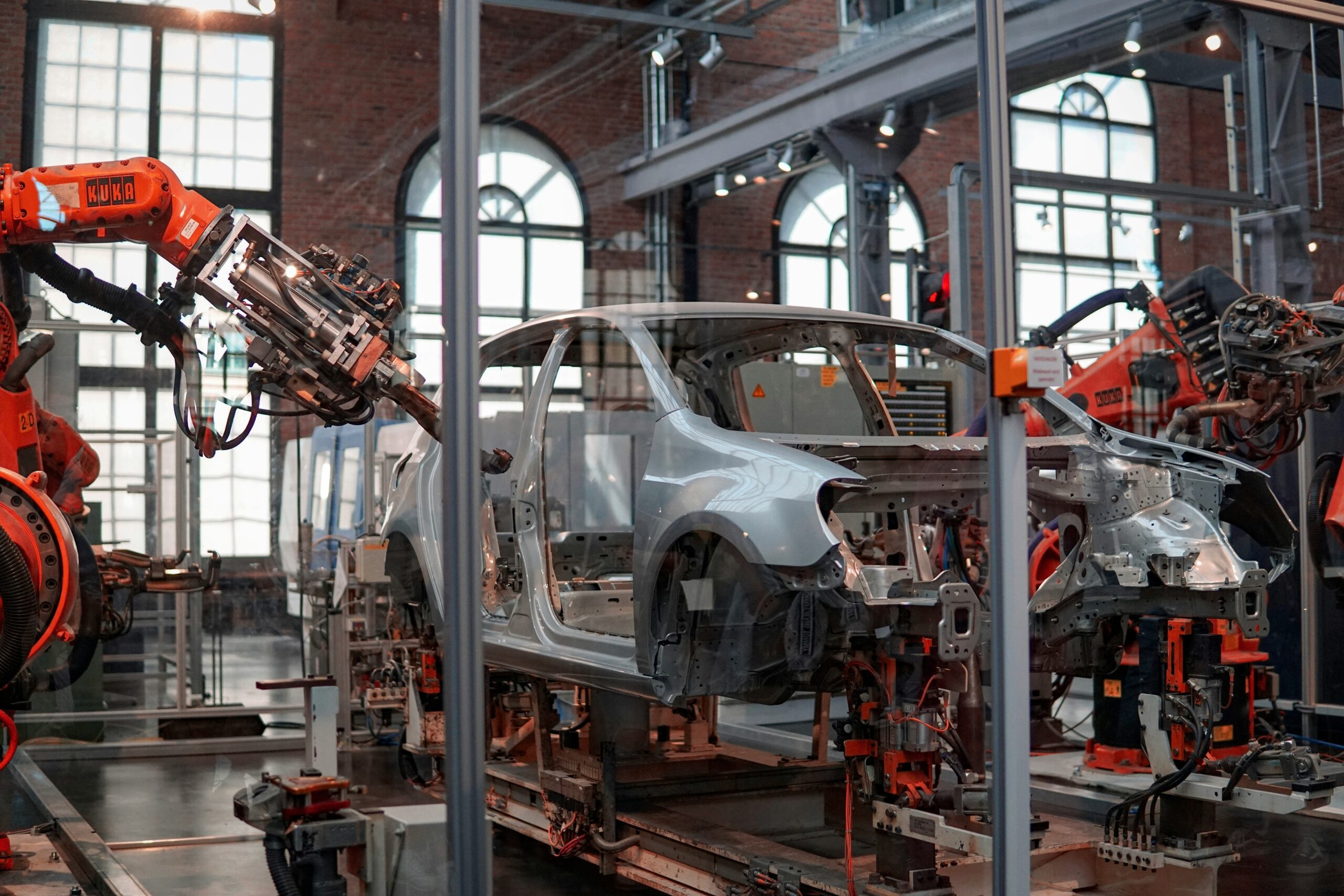
Choosing an automotive automation company is not a decision you get to make twice a year. Once a system is installed on your line, you’re living with it and the vendor who built it for the next 10 to 15 years. Pick well, and you get a partner who shows up when something breaks at 2 a.m. Pick poorly, and you get a line that never quite hits its rated cycle time, a support line that goes to voicemail, and a system nobody on your team fully understands.
The problem is that most RFPs for automotive automation look similar on paper. Every vendor claims deep automotive experience, every proposal promises the cycle time you asked for, and every quote comes in somewhere in the same ballpark. The real differences only show up once you know what questions to ask. This guide walks through exactly that.
What an Automotive Automation Company Actually Does
Before comparing vendors, it’s worth being precise about what you’re buying. An automotive automation company designs, builds, integrates, and supports the automated systems that run on your production line robotic welding cells, vision inspection stations, material handling systems, powertrain assembly automation, and the controls that tie it all together.
That’s a different scope than a robot manufacturer (which builds the arm but doesn’t engineer the full cell) or a general industrial automation shop (which may have never worked inside the specific pressures of automotive: takt time, mixed-model flexibility, and traceability requirements that don’t exist in most other industries). The company you choose needs to own the full system, not just one component of it.
Some companies specialize in automotive automation solutions exclusively. Others treat automotive as one vertical among many. Neither approach is automatically wrong, but it changes what questions you need to ask which is what the rest of this guide covers.
Why This Decision Is Harder Than It Looks
A few things make choosing an automotive automation company trickier than choosing most other vendors:
The mistakes are expensive and slow to surface. A poorly engineered fixture or an under-spec’d robot doesn’t usually fail on day one. It shows up six months in, as a line that can’t hit its rated output, or a defect rate that creeps up under real production volume instead of the vendor’s demo conditions.
You’re buying a long-term relationship, not a product. Automation systems need calibration, part changes, software updates, and eventual retrofits over their working life. The company that built it is usually the one best positioned to support it assuming they’re still around and still willing.
Automotive has almost no tolerance for downtime. A line that’s down for a day doesn’t just cost that day’s output it can cascade into missed OEM delivery windows with contractual penalties attached. The company you choose needs to understand that pressure, not just acknowledge it in a sales call.
“Automation experience” means very different things. A company that’s automated packaging lines and a company that’s automated body-in-white welding cells both have “manufacturing automation experience” on their website. Only one of them understands torque verification, weld monitoring, and multi-model changeover.
8 Things to Evaluate Before You Choose an Automotive Automation Company
1. Automotive-Specific Experience, Not Just General Automation Experience
Ask for examples of automotive work specifically not “manufacturing automation” broadly. A company that’s built cells for powertrain assembly, body-in-white welding, or EV battery production understands things a generalist doesn’t: takt time pressure, mixed-model production, and the traceability standards automotive OEMs expect.
Ask directly: How many automotive lines have you built in the last three years? Can I talk to one of those customers? A company confident in its automotive track record will connect you.
2. Whether They’re an Authorized Systems Integrator for Established Robot Platforms
The robot brand behind your system matters less than most people think but the integrator’s relationship with that brand matters a lot. An authorized FANUC system integrator (or an authorized integrator for another major platform like ABB, Yaskawa, or KUKA) has been vetted by the robot manufacturer, gets direct access to engineering support and training, and can source parts and firmware updates faster than a shop with no formal relationship.
This matters most when something breaks. An authorized automotive automation systems integrator can usually get a replacement part or manufacturer-level support faster than a company working at arm’s length from the robot vendor.
3. Custom Engineering vs. Off-the-Shelf Assembly
Some companies build every project from a catalog of pre-configured modules. Others engineer custom automotive automation systems designed around your specific part geometry, cycle time targets, and floor layout. Neither approach is wrong for every situation a simple, well-defined task might not need a from-scratch design but you need to know which one you’re getting, because it changes both the price and the fit.
Ask to see the engineering process: Do they build a digital simulation of your line before fabrication starts? Do they run a Factory Acceptance Test (FAT) before the system ships? A company that skips simulation and testing is asking you to discover problems on your own floor, on your own timeline.
4. Controls Platform Flexibility
Find out which PLC and HMI platforms the company works with. If your plant standardizes on Allen-Bradley and the automation company only works in Siemens, you’re either forcing a platform change across your facility or accepting a system your existing maintenance team can’t service without retraining. A company that works across all major platforms (Allen-Bradley, Siemens, Beckhoff, and others) can build a system that fits your existing infrastructure instead of forcing you to fit theirs.
5. Vision, Inspection, and Data Capabilities
Ask specifically how the company handles quality verification and traceability not just robotics. Does the proposed system include vision inspection integrated at line speed, or is quality checking left as a manual step after the fact? Does it capture part-level data (torque values, weld parameters, pass/fail results) automatically, or will your team need a separate system to get that visibility? The best automotive automation solutions build data capture into the system from the start, not as an afterthought.
6. Support and Service After Commissioning
This is where a lot of buyers under-invest their evaluation time, and it’s where the real differentiation lives. Ask:
- What’s the average response time for an emergency service call?
- Do you have field technicians near my facility, or does support come from a call center?
- What’s included in the standard support agreement, and what costs extra?
- Do you provide training for our maintenance and operations staff, and is it hands-on or documentation-only?
- If a component fails, how quickly can you source a replacement?
A company that hesitates on any of these or gives vague answers is telling you something about what happens after the check clears.
7. References From Similar Production Environments
Generic references don’t tell you much. Ask for references from companies running similar volumes, similar model-mix complexity, and ideally the same general category of work (body assembly, powertrain, EV production, etc.). Then actually call them, and ask pointed questions: Did the system hit its rated cycle time on day one? How responsive has support been eighteen months in? Would you hire this company again?
8. Financial Stability and Longevity
An automation system is a 10-to-15-year asset. If the company that built it isn’t around in five years, you inherit a system with no factory support, no source for proprietary parts, and no institutional knowledge of how it was engineered. Ask how long the company has been operating, and look for signs of stability steady growth, long-tenured staff, and existing long-term customer relationships.
Custom Automation Company vs. Turnkey Provider: Which Do You Need?
This is a natural next question once you’ve narrowed your list, and it’s worth a quick answer here. A custom automotive automation build is engineered from the ground up around your specific process best when your part geometry, cycle time targets, or facility constraints don’t fit a standard configuration. A turnkey provider delivers a more pre-packaged system, often faster to deploy and priced more predictably, and can be the better fit when your process is closer to a standard application.
Many capable automotive automation companies offer both paths and will help you figure out which one actually fits your project, rather than pushing you toward whichever model they’re set up to sell. If a vendor only offers one path regardless of what your project needs, that’s worth noting.
Red Flags to Watch For
A few warning signs are worth taking seriously during vendor evaluation:
- Vague answers about automotive-specific experience. If they can’t name automotive projects or connect you with automotive references, they likely don’t have the depth they’re claiming.
- No mention of simulation or testing before build. Skipping digital simulation and Factory Acceptance Testing shifts risk onto your production floor.
- Reluctance to discuss support response times. This usually means the answer isn’t good.
- One-size-fits-all proposals. If the quote looks like it could apply to any manufacturing vertical with a find-and-replace, it probably wasn’t engineered specifically for your process.
- No local or regional service presence. A support team that has to fly in from across the country turns a half-day fix into a multi-day production loss.
A Simple Evaluation Framework
When you’re comparing two or three finalist companies, score each one against the same criteria so the comparison stays objective rather than driven by whoever gave the best sales pitch:
- Automotive-specific project history (weight heavily)
- Authorized integrator status with your preferred robot platform
- Custom engineering process (simulation, FAT, documented testing)
- Controls platform compatibility with your existing plant
- Vision, inspection, and data/traceability capabilities
- Support response time and local service presence
- Reference feedback from similar production environments
- Company stability and longevity
Choosing a vendor that scores well across all eight protects you far better than picking one that scores exceptionally well on price alone.
The Bottom Line
Choosing the right automotive automation company comes down to looking past the proposal and into how the company actually works: their real automotive experience, their relationship with the robot platforms they integrate, their engineering rigor before anything ships, and most importantly what happens when you call them for help two years from now. Price matters, but it’s the easiest number to compare and the least predictive of whether the relationship works long-term.
Fenbotics, based out of Lancaster South Carolina, is an authorized FANUC system integrator with 15+ years engineering custom automation systems for OEM and Tier manufacturers, and every system we build is 100% custom-engineered around the line it runs on never pulled off a shelf. If you’re evaluating automation partners for an upcoming project, talk to our team about what your line actually needs.