


Blog
Industrial Automation Solutions for Automotive Manufacturers: A Buyer’s Guide

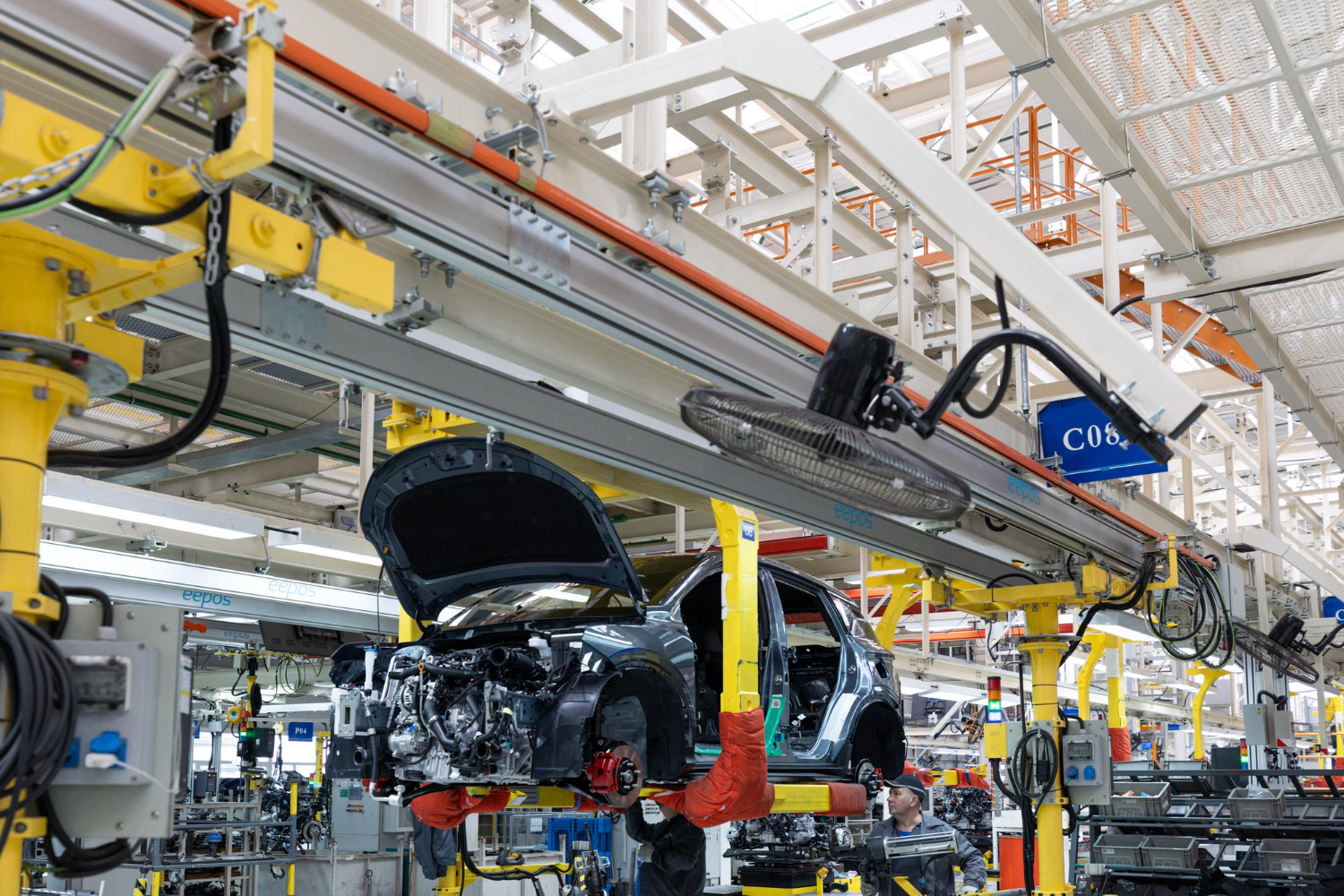
Buying industrial automation solutions for an automotive plant feels a lot like buying a house. You start with a rough idea of what you need, you collect a stack of brochures, and somewhere along the way you realize every seller uses the same adjectives. “Scalable.” “Flexible.” “Best-in-class.” None of those words tell you whether the system will hit its rated output on your line, with your parts, in your facility.
This guide cuts through that. You’ll learn what industrial automation solutions actually include, how the major categories fit together, how to scope a project before you talk to vendors, what to budget for, how to measure return, and which mistakes cost buyers the most. Use it as a working checklist, not just background reading.
What Are Industrial Automation Solutions in an Automotive Setting?
Industrial automation solutions are engineered systems that use robotics, programmable controls, sensors, vision, and software to perform manufacturing tasks reliably and repeatably. In automotive manufacturing, they cover everything from a single robotic welding cell to a connected set of stations that assemble, inspect, test, and track components across a whole line.
The phrase gets used loosely, so it helps to draw a line between three things buyers often mix up:
- A product is a single component, such as a robot arm, a camera, or a PLC.
- A system combines components into a working station that does a defined job.
- A solution is a system engineered around your process, with the integration, testing, documentation, and support that make it work in production.
When you shop for automotive automation solutions, you’re buying the third thing. A great robot inside a poorly engineered cell still gives you a poor result. The engineering around the hardware is where most of the value lives.
The Main Categories of Automotive Industrial Automation
Automotive industrial automation breaks into a handful of solution types. Most projects combine two or more, so understanding each one helps you scope the whole picture.
Robotic Assembly and Welding
Six-axis robots handle fastening, joining, pressing, dispensing, and welding across body, powertrain, and final assembly. These cells shine where a process demands repeatable motion and verified results, such as spot welding body structures or torque-controlled fastening on drivetrain components.
Material Handling and Part Transfer
Robots, conveyors, and automated transfer systems move parts between stations, stage components, and feed lines. Good material handling keeps upstream and downstream processes balanced, so one station never starves or floods the next.
Vision Inspection and Measurement
Cameras and sensors inspect parts at line speed, checking weld quality, part presence, orientation, dimensions, and surface condition. Vision turns quality checking from an occasional sample into a check on every part.
End-of-Line and Functional Testing
Test stations verify that a finished assembly performs as designed. Depending on the product, that might include leak testing, torque and angle verification, electrical checks, or full functional validation.
Controls, PLC, and HMI Systems
Controls tie everything together. PLCs coordinate motion and logic, HMIs give operators clear status and fault information, and networks connect stations to each other and to plant systems. Controls quality shows up every day in how quickly your team diagnoses and clears faults.
Safety Systems
Guarding, light curtains, interlocks, safety PLCs, and emergency stop circuits protect everyone who works near equipment. Safety belongs in the design from the first drawing, not at the end of the project.
Data Collection and Plant Connectivity
This category has grown fast. Modern solutions capture cycle times, fault codes, quality results, and process values, then pass them to monitoring and reporting tools. We’ll look at this more closely below, because buyers often underestimate its value.
EV-Specific Solutions
Battery module and pack assembly, e-drive assembly, and high-voltage testing add new requirements around electrical safety, cleanliness, and gentle part handling. If your roadmap includes electrification, ask every vendor how their solutions adapt to EV work.
Start With the Problem, Not the Product
The most common buying mistake is shopping for equipment before defining the problem. A vendor who hears “we need a robot” will quote a robot. A vendor who hears “our weld quality varies between shifts and we can’t prove which parts passed” can recommend something far better.
Before you contact anyone, write down answers to these questions:
- What problem are you solving? Name it in one sentence: a bottleneck, a quality escape, a changeover delay, a missing data trail, an upcoming program launch.
- What are your target numbers? Define cycle time, annual volume, quality targets, and uptime expectations.
- What parts and variants will run? List every model, material, and size, plus any variants planned over the next few years.
- What does your facility look like? Capture floor space, power, air, ceiling height, and how parts arrive and leave.
- What must it connect to? Note existing PLC platforms, MES or ERP systems, and any traceability requirements from customers.
- What does success look like at 90 days and at three years? Short-term launch goals and long-term flexibility needs often pull in different directions, and your vendor should know both.
A one-page brief built from these answers makes every vendor conversation sharper and every quote easier to compare.
Custom, Turnkey, or Standard: Choosing the Right Approach
Industrial automation solutions generally come in three flavors, and each fits different situations.
Standard or catalog systems use pre-configured modules. They deploy quickly and cost less up front, and they work well for simple, well-defined tasks. They flex less when your parts or process don’t match the standard configuration.
Custom-engineered systems get designed around your parts, cycle time, layout, and quality requirements. They take more engineering effort, but they fit your process instead of forcing your process to fit the equipment. Complex assemblies, mixed-model lines, and unusual part geometries often justify this route.
Turnkey systems put one provider in charge of design, build, integration, installation, and commissioning, so you deal with a single accountable partner. Turnkey can be custom or standard underneath, so treat it as a delivery model, not a design philosophy.
Many buyers land on custom-engineered, turnkey-delivered solutions for their critical stations, and use standard systems for simpler, lower-risk tasks. A good partner will tell you honestly which approach fits each station rather than pushing the one they prefer to sell.
How to Evaluate Vendors
When you compare automotive automation companies, look past the proposal and test the substance behind it.
Automotive-specific experience. Ask for automotive projects by category, such as body assembly, powertrain, vision, or EV, and ask to speak with those customers.
Integrator credentials. Authorized integrator status with a major robot manufacturer, such as FANUC, signals vetting, training, and faster access to support and parts.
Engineering rigor. Ask whether the vendor simulates cells digitally before fabrication, and whether they run factory acceptance testing before shipping. These two steps catch expensive problems while they’re still cheap to fix.
Controls flexibility. Confirm the vendor works with your plant’s PLC and HMI standards, so your maintenance team can support the system without starting from zero.
Documentation and training. Ask what you receive at handover: electrical drawings, program backups, spare parts lists, and hands-on training for your technicians.
Support after installation. Ask about response times, local service coverage, spare parts availability, and what a standard support agreement includes.
Financial stability. An automation system should run for a decade or more. Choose a partner you expect to see in year ten.
For a deeper walkthrough, see our guide on how to choose the right automotive automation company.
What You’re Actually Paying For: Understanding the Budget
Buyers sometimes compare quotes by looking only at the bottom line. That approach hides important differences. A realistic budget for industrial automation solutions usually includes:
- Engineering and design: mechanical, electrical, and controls design, plus simulation
- Hardware: robots, tooling, fixtures, conveyors, sensors, cameras, and enclosures
- Controls and software: PLC and HMI programming, robot programming, and integration with plant systems
- Safety: guarding, safety devices, and risk assessment
- Build and testing: fabrication, assembly, and factory acceptance testing
- Installation and commissioning: shipping, rigging, startup, and tuning on your floor
- Training and documentation: handover materials and technician training
- Support and spares: service agreements and critical spare parts
When two quotes differ sharply, check what each one includes. A lower price that leaves out simulation, testing, or training often costs more in the end, since you pay for those gaps during launch.
Measuring Return on Investment
A strong business case rests on concrete, measurable factors. Build yours around these.
Throughput gains. If a station limits your line’s output, removing that constraint raises the output of everything around it. Calculate the value of each additional good part per hour.
Scrap and rework reduction. Consistent processes and in-line inspection reduce defects. Multiply your current scrap and rework cost by the improvement you expect.
Quality escape prevention. One defective part that reaches a customer can trigger sorting, containment, chargebacks, or recalls. Even a modest reduction in escape risk carries real value.
Faster changeovers. Programmable tooling and well-designed fixtures cut the time lost switching between models, which adds productive hours back to your schedule.
Reduced unplanned downtime. Better diagnostics, clearer HMIs, and condition data help your team prevent and resolve faults faster.
Traceability and compliance value. Part-level records reduce the cost and risk of audits, warranty claims, and customer investigations.
Launch readiness. For new programs, automation that’s ready on time protects revenue and customer relationships.
Add these up against the total project cost, and you get a payback period you can defend to leadership. Treat the numbers as ranges instead of single values, and stress-test your assumptions before you present them.
OEE and IoT Data Collection: The Value Buyers Overlook
Many buyers focus on what the automation does and forget what it knows. Every automated station generates data about cycle times, fault events, quality results, and process values. When you capture that data on purpose, you gain a clear view of how your line really performs.
Overall equipment effectiveness, or OEE, combines availability, performance, and quality into a single measure of how well equipment uses its scheduled time. Automated stations can feed OEE calculations automatically, so you see where time disappears: short stops, slow cycles, changeovers, or quality losses.
When you evaluate solutions, ask vendors:
- Which data does the system capture by default?
- How does it connect to your MES, historian, or reporting tools?
- Can your team view station performance in real time?
- How does the system store part-level traceability records, and for how long?
Designing data collection in from the start costs far less than retrofitting it later. It also gives you the evidence you need to keep improving the line long after commissioning.
A Practical Roadmap From Idea to Production
Most successful projects follow a similar path.
- Define the problem and requirements. Build your one-page brief.
- Identify candidate stations. Prioritize by impact, risk, and readiness.
- Request proposals from a short list. Three qualified vendors give you enough to compare without wasting time.
- Review concepts, not just prices. Ask each vendor to explain their approach, assumptions, and risks.
- Select a partner and finalize scope. Lock down requirements, acceptance criteria, and schedule in writing.
- Design and simulate. Review layouts and simulations together before fabrication begins.
- Build and test at the vendor’s facility. Run factory acceptance testing with your team present.
- Install and commission. Coordinate floor access, utilities, and production schedules.
- Train and hand over. Make sure your technicians can operate, troubleshoot, and maintain the system.
- Monitor and improve. Use your data to tune performance and plan the next phase.
Common Mistakes Buyers Make
Avoid these pitfalls, and you’ll sidestep most of the pain other buyers experience.
- Buying on price alone. The cheapest quote often leaves out engineering, testing, or support that you end up paying for later.
- Skipping the requirements brief. Vague requirements produce vague proposals and surprise change orders.
- Ignoring future variants. A system that handles today’s part but not next year’s costs you twice.
- Treating safety as an add-on. Safety design works best when it shapes the layout from the beginning.
- Overlooking integration. A station that doesn’t talk to your plant systems creates manual work and data gaps.
- Skipping acceptance testing. Finding problems at your facility costs more than finding them at the vendor’s.
- Neglecting training and documentation. Your team keeps the system running for years, so give them the tools to do it well.
- Forgetting the support relationship. Plan for service, spares, and upgrades before you sign.
Your Buyer’s Checklist
Print this and use it in every vendor meeting:
- Do we have a written problem statement and requirements brief?
- Does the vendor show real automotive projects and offer references?
- Does the vendor hold authorized integrator status with a major robot platform?
- Will they simulate before building and run factory acceptance testing?
- Does their controls approach match our plant standards?
- Does the proposal include vision, safety, and data collection where we need them?
- Is the quote complete across engineering, build, installation, training, and documentation?
- Do we understand the support terms, response times, and spare parts plan?
- Can the design handle our planned future variants?
- Have we modeled ROI using conservative assumptions?
The Bottom Line
The right industrial automation solutions fit your process, connect to your plant, protect your people, and give you data to keep improving. Buyers who define the problem first, compare vendors on substance, and budget for the whole project end up with systems that perform on day one and keep delivering for years.
That’s the standard we hold ourselves to at Fenbotics. As an authorized FANUC system integrator, we engineer every automotive automation solution around your specific line, from robotic assembly and welding to vision inspection, end-of-line testing, controls, safety, and EV production systems. We simulate before we build, test before we ship, and stay with you long after commissioning, so your system performs the way the proposal promised. If you’re planning your next project, talk to the Fenbotics team and let us show you what a custom-engineered solution can do for your plant.